


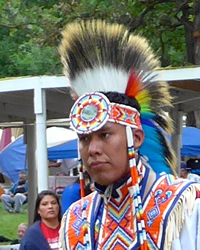

The Omaha are a Native American tribe originally belonging to the Dhegiha branch of the Siouan language family. The Omaha, "those going against the wind or current," lived along the Ohio River valley before migrating westward in the 17th and 18th centuries. They were semi-nomadic, practicing both farming and buffalo hunting. By 1815, the Omaha became concerned about the dwindling bison food supply and the need for protection from hostile tribes. This led to the first signing of a treaty with the United States government. By the 19th century, they established permanent villages along the Missouri River in what is now Nebraska. The Omaha Tribe had a unique social structure which was split into two groups – the Sky People and the Earth People. Clans of each group traced their lineage through the fathers. The Sky People were associated with peace and spiritual matters, while the Earth People were linked to war and worldly affairs. Art and craftsmanship such as quillwork, beadwork and pottery were integral to the Omaha culture. Clothing often featured intricate decorations and symbolic animal motifs. Their artistry was also reflected in their music and dance, with tribal celebrations often featuring rhythmic songs, dances and storytelling.
Contemporary Omaha life blends traditional culture with modern society. Many families participate in both rural and small-town economies, including farming, ranching, tribal enterprises and service-sector work. Social life remains deeply connected to extended families and tribal events such as powwows, naming ceremonies and seasonal gatherings. The annual Omaha Powwow serves as a testament to the enduring spirit of the Omaha people, their dedication to preserving traditions and their commitment to passing those traditions on to future generations. Many Omaha people live on the Omaha Reservation where cultural revitalization efforts aim to preserve the Omaha language, known as Umo?ho?, and pass it on to younger generations.
Traditionally, the Omaha held a spiritual worldview centered on Wakónda, a sacred and life-giving power that permeates all existence. Ceremonies, songs and clan responsibilities expressed thankfulness, reverence and the moral structure of community life. Sacred pipes, traditional healers and seasonal rites played central roles in maintaining harmony and connecting with nature.
Today, Christianity is the most common religion among the Omaha, introduced through missionaries in the 19th century. Many Omaha blend Christian and traditional practices, maintaining ceremonies, powwows and spiritual customs alongside church attendance.
In the close-knit community of the reservation, economic challenges such as limited job opportunities and shortages in housing and healthcare affect daily life. Strengthening housing, transportation and broadband access would contribute to long-term community stability. The Omaha face issues concerning tribal sovereignty, land rights and economic development. The Omaha people need expanded access to sustainable economic opportunities that support families and reduce poverty.
In recent years, the Omaha have been working to revitalize their language, which is critically endangered, to preserve their rich cultural heritage. The Omaha need to promote youth leadership, educational achievement and cultural pride to help address social challenges and build a stronger future for Omaha communities.
Pray for the revitalization and preservation of the Omaha language and cultural traditions.
Pray for healing, hope and accessible healthcare for families facing physical and mental-health challenges.
Pray for wise leadership in tribal governance, education and community development initiatives.
Pray for economic development and opportunities that bring dignity and stability to families.
Pray for young Omaha members to grow in confidence, identity and hope for the future.
Pray for spiritual renewal, that Omaha youth and families may find Christ without giving up their cultural identity.
Pray that the Omaha will soon become Christ's ambassadors to those without hope.
Scripture Prayers for the Omaha in United States.
https://www.thenicc.edu/about/history/omaha-tribe-of-ne-and-ia.php
https://www.omahaimc.org/history-and-culture-of-the-omaha-tribe/#Social_Structure_and_Practices
https://mnisose.org/profiles/omaha.htm
https://ehrafworldcultures.yale.edu/cu
| Profile Source: Joshua Project |


